
Have you seen those videos where someone gets exposed, someone looks stupid, or someone tries to flex, and suddenly the comments start tearing the person apart?
Usually, the nastiest comments get thousands of likes.
You don’t even have to be wrong. You can be doing something completely normal, and some random person will still find a way to make you look stupid and move on like nothing happened.
Humans have always made fun of each other. That part isn’t new. What feels different is how much people enjoy watching it now.
Anonymity can explain why someone feels safe being rude. It still doesn’t explain why thousands of other people reward it.
So what exactly are we enjoying when somebody gets publicly embarrassed?
The Commenter Becomes the Clever One
Sometimes it feels like people aren’t even looking for something useful anymore. They’re looking for something to dislike.
Under every video, people search for anything they can call cringe. Any flaw they can point out. Any sentence they can twist into a joke.
They aren’t only pointing out flaws. They’re trying to show that they are smarter and better.
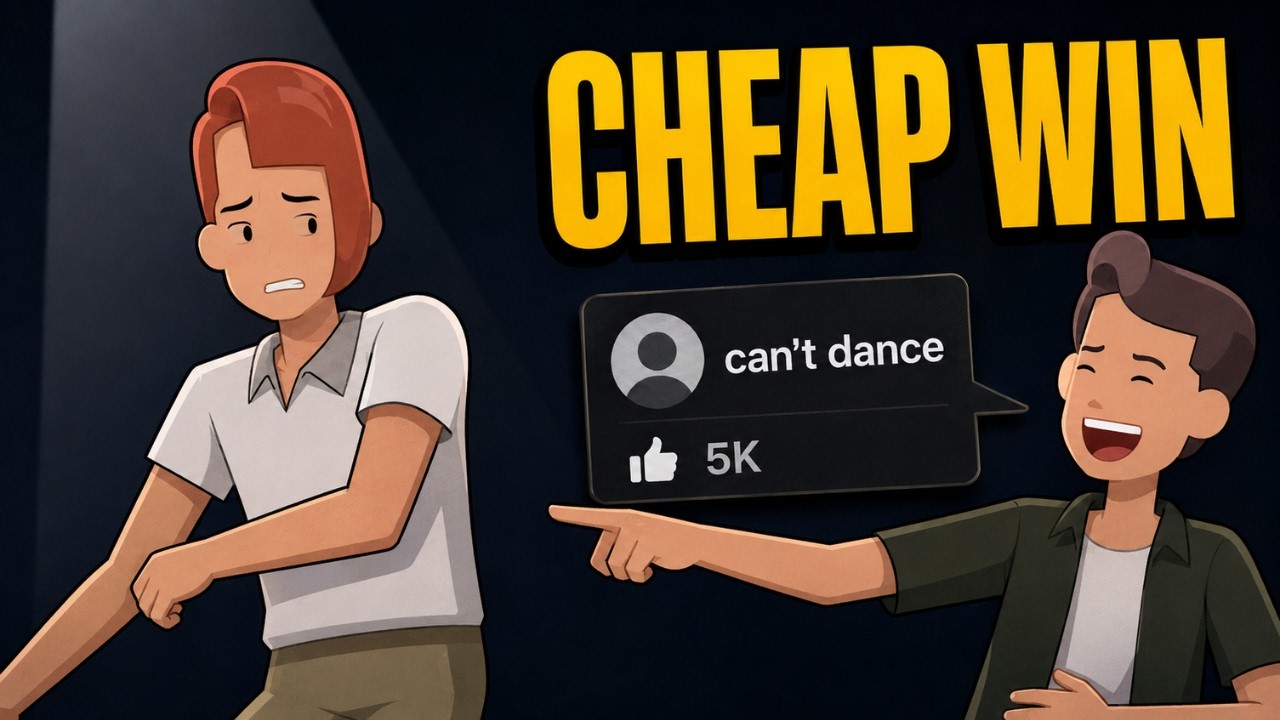
Imagine that you upload a dance video. Maybe it’s genuinely good. It gets decent reach, and then a stranger comments: “Very talented. Keep it hidden.”
The strange part is that there is no way to judge this person back. Most of the time, they have shown no proof of their own expertise. Their profile picture is a random logo, an anime face, or nothing at all.
But somehow this person has been appointed chairman of the judging committee.
The commenter didn’t upload a better dance. Obviously, that would require actually doing something. They gave a one-line judgment. Yet because the comment was funny, it might get 5,000 likes.
For a few seconds, the dancer becomes the joke and the commenter becomes the clever person in the room.
Making another person look stupid can feel like winning.
Humiliation Creates a Social Scoreboard
A lot of this is really a status game.
Think about football. A player starts celebrating too early, then the referee raises the offside flag. People love that moment because one second ago he looked untouchable, and now he looks stupid.
The same thing happens in debates. Someone looks dominant. One reply lands, and suddenly everyone says he got cooked, destroyed, or humbled.
A normal disagreement gives you two opinions. Humiliation gives you a winner and a loser.
Here’s the cheap part: you don’t have to win anything yourself.
The person being mocked has something visible that can be attacked—their face, body, opinion, confidence, lifestyle, or mistake. The person mocking them may have almost nothing visible about themselves, yet still gets to act like the judge.
One decent insult and suddenly they’re above you for five seconds.
They didn’t climb higher. Someone else fell lower.
The higher the person was, the better the fall feels. That’s why people especially love watching a cocky athlete, rich person, influencer, or someone extremely confident get embarrassed.
Sometimes the target isn’t even above them. It can be a normal person trying to improve.
Someone starts getting fit, learning guitar, dressing better, building something, or becoming more confident. Suddenly people want to cut them back down because the comparison is uncomfortable.
This person started where I am, and now they’re moving.
Calling them cringe is easier than asking why you’re still standing in the same place.
Cruelty Feels Better When It Looks Like Justice
Change the target and the whole game feels different.
If a harmless old woman gets publicly embarrassed, most people feel uncomfortable. Give them someone they already dislike—an arrogant influencer, a rude customer, some cocky guy—and suddenly humiliation becomes satisfying.
Now people aren’t thinking, “We’re enjoying this person getting embarrassed.” They’re thinking, “Good. Someone finally put him in his place.”
In your mind, you aren’t watching humiliation anymore. You’re watching justice.
The internet makes this ridiculously easy because you barely need to know the person. You only need a label: cringe guy, narcissist, pick-me, loser.
A 20-second clip is enough. After that, people stop reacting to the person and start reacting to the character they’ve already decided this person is.
One rude comment looks rude. When 10,000 people like it, it doesn’t feel like bullying anymore. It feels like participation.
People copy what gets laughs. Soon every comment section sounds like it was written by the same fifteen people. Same sarcasm. Same insults. Same language about who got cooked, humbled, or exposed.
After a while, it simply feels like this is how people talk online.
Platforms Learned That Conflict Pays
Humans aren’t the only ones noticing what gets rewarded. Platforms notice too.
When people get angry, they comment, argue, replay the clip, and send it to somebody else. Creators quickly learn that having a villain is useful.
A calm conversation may disappear. Something titled “He Destroyed Him” gets clipped, shared, and pushed everywhere.
Platforms didn’t invent our appetite for conflict. They learned how profitable it is.
The algorithm isn’t sitting there wondering whether this is healthy for civilization. It notices that people stopped scrolling, watched longer, and started reacting.
Once conflict reliably gets attention, people make more of it.
The platform still didn’t create the original aggression. It gave that aggression an audience.
Online Aggression Doesn’t Stay Online
Where was all that aggression before people could dump it online?
Probably inside the same people. They simply couldn’t express it this freely.
In real life, you usually can’t say whatever you want. You know the person. They know your face. You may have to deal with them again tomorrow.
Online, most of those brakes disappear. The anger you would normally swallow suddenly has somewhere to go.
You’re not attacking anybody. You’re only watching. Someone else humiliates the person, you enjoy it, and technically your hands are clean. Everyone else is laughing too, so you can enjoy the aggression while telling yourself you aren’t the aggressive one.
The louder and ruder people become, the more common that behavior looks. Everyone sees it everywhere, then starts treating it like the normal way to behave.
Eventually, the same mindset enters ordinary life.
Even dating starts looking like two people trying not to give the other person more power. Who texts first? Who cares less? Who has more options? Who looks more desperate?
Everyone is trying not to be the person who gets played, embarrassed, or loses status.
After a while, you stop assuming the other person is acting in good faith. You start looking for the angle. You become guarded because you expect the other person to be selfish. They notice your behavior and become guarded too.
Eventually, both people look at each other and think, “See? People are selfish now.”
Maybe the internet isn’t only showing us how people behave. It is teaching us what gets rewarded.
Not everybody suddenly became evil. Meanness became entertaining.
Once something becomes entertainment, we stop noticing how often we are practicing it.
And once you expect everyone else to be cold, selfish, or ready to embarrass you, you start behaving that way first.